
Josh Dannin
Josh Dannin is an artist and printmaker from Philadelphia, now based in Bethlehem, New Hampshire. He runs directanglepress.com, a letterpress and risograph printshop and artist residency in the White Mountains. Previously a regular contributor to Printeresting.org, he coedits Power Washer Zine, a semiannual publication about screenprinting, featuring artist interview and essays, high-end humor, and lo-fi graphics. In addition to running workshops at Directangle Press, Dannin has taught printmaking at institutions including Dartmouth College, New Hampshire Institute of Art, and Saint Anselm College. He received a BFA in Studio Art (Printmaking & Photography) from Kutztown University of Pennsylvania and an MFA in Printmaking from Ohio University. His printed and bound works have been exhibited nationally and internationally at galleries, artist-run spaces, and museums including International Print Center New York (Chelsea), Anderson Ranch Arts Center (Snowmass Village, CO), Rochester Museum of Fine Arts (Rochester, NH), Vitebsk Center of Contemporary Art (Vitebsk, Belarus), Cork Printmakers (Cork, Ireland), and Fondazione II Bisonte (Florence, Italy).
FEATURED ARTIST
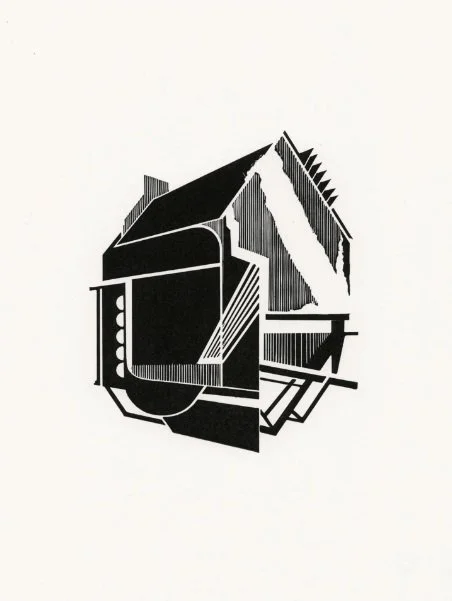
I began producing this body of architectural work in 2012, largely influence by the suburban Philadelphia landscape of my childhood—a stone’s throw from one of the nation’s first examples of quintessential suburbia, Levittown, Pennsylvania. This built environment was at once fascinating and boring for a number of historical, personal, and anthropological reasons. Motivated by the seriality, pattern, and function of tract housing and other modular housing systems, I use the framework of the grid to reimagine space and form. The puzzle-like nature of each composition is the result of working with a kit of parts, an alphabet of sorts, derivative of architectural components and simple building blocks.
This body of work is produced using relief printmaking process: the inking and the printing of carved wood or linoleum blocks and handset letterpress type or hand-operated presses once used in commercial production. The equipment I use and many of the letterforms and abstract modular shapes I work with come from the printing era of the past; a time when cast iron, molten lead, and endgrain wood were responsible for nearly every printed word and image in the world. Most of the presses were already in operation for fifty to one hundred years before they came into my possession. In many ways, I’m just as much their custodian as I am the artist and printer who puts them to work every day.
When I’m not printing larger runs on my 1906 Golding Jobber, I produce all of my fine art prints on a 1952 Vandercook No. 4T Proof Press, which I found in disrepair and brought back to life in early 2020. In order to produce anything on these presses, be it a woodcut, typographic composition, or any combination of the two, everything must be locked up on the press bed—that is, physically locked into place with pressure from two directions to create a fixed, printable form. Once locked up, ink is applied to the composition, and a print can be produced in whatever quantity desired.
The precise mechanics of these antique presses allow every unique detail and texture in the printed form to be translated as an impression on the paper. While I carefully plan each composition just as an architect would design a structure, there’s always an unexpected element revealed in the final print, from a block’s subtle wood grain to its wear and tear from decades of use. The resulting print is evidence of my hand and decision making, and at the same time a collaboration with any printer who has ever touched these materials and equipment in the past—a record of their unique history, which can only be documented through this timeless printing process.
These compositions are indeed made up of architectural structures, both real and imagined. These are fragments of my life—places I’ve lived in, lived among, passed by, dreamed of, hoped to see, or longed to inhabit. They are also formal improvisations on the concept of ideal construction and the perfection of process. This work does immediately reference the landscape of my childhood, however, I’m now learning that it is not strictly a social and formal exploration of that built environment, but rather an ongoing reflection on a place I’ve been simultaneously running from and running towards for much of my adult life.
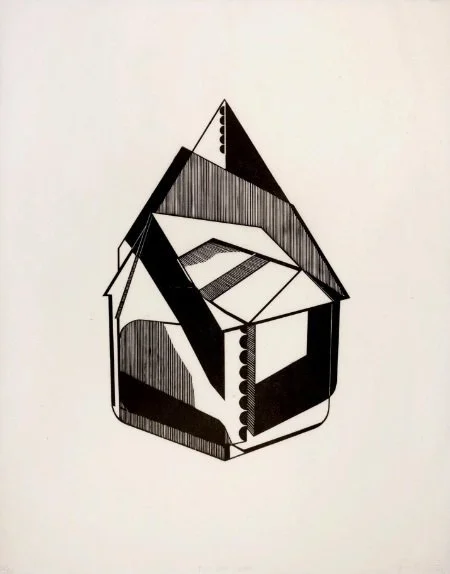
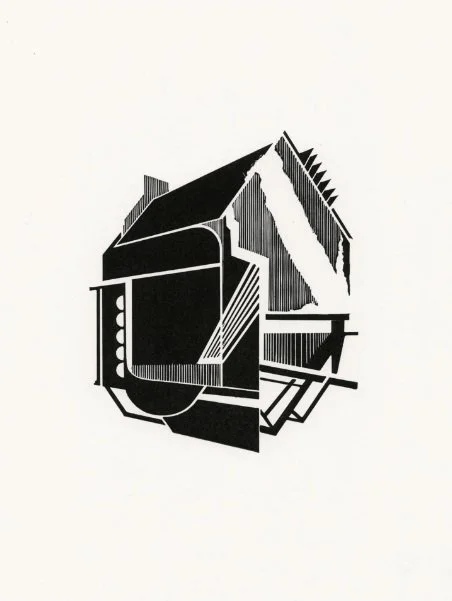
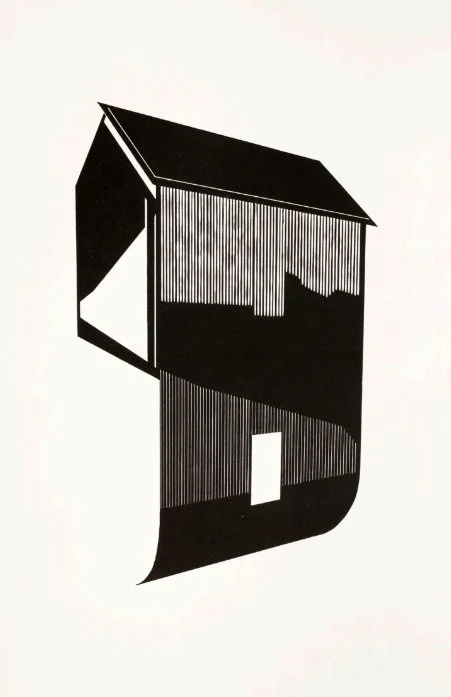
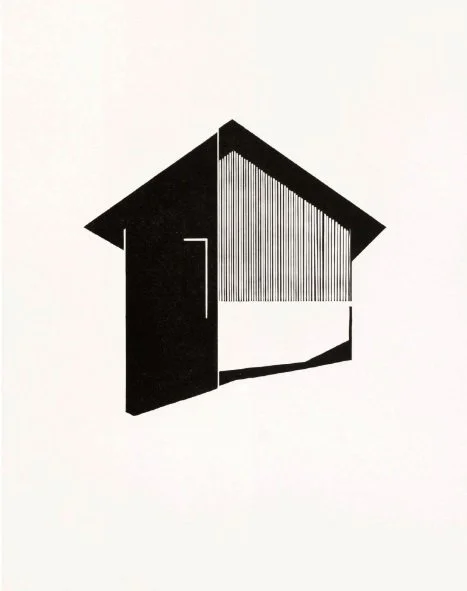
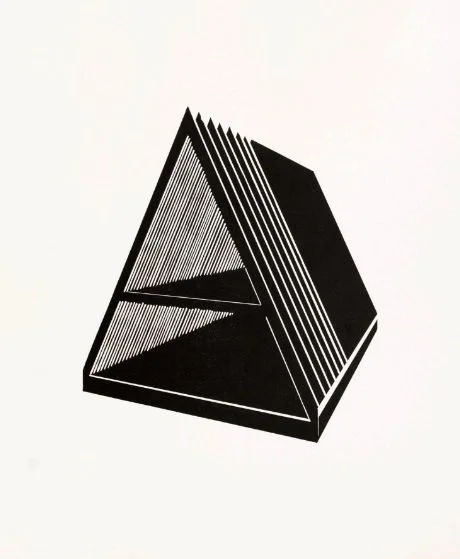
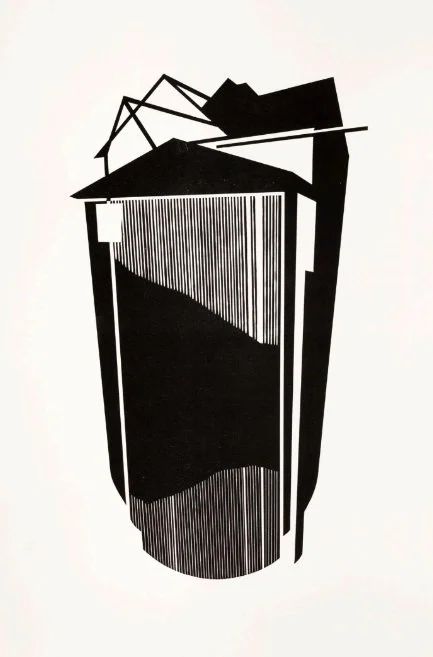
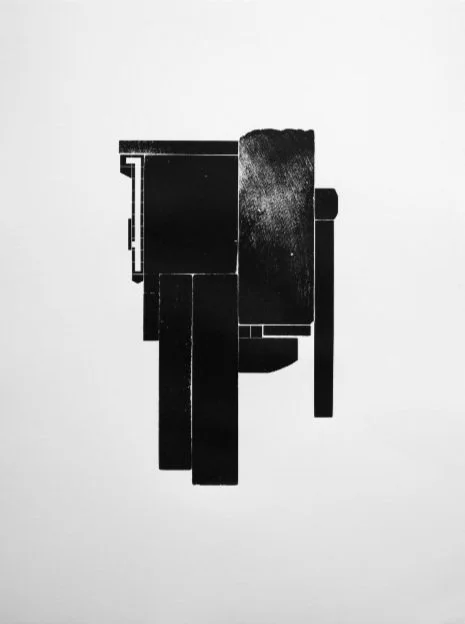
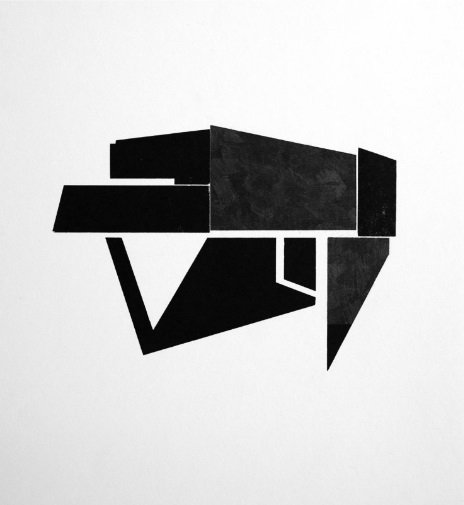
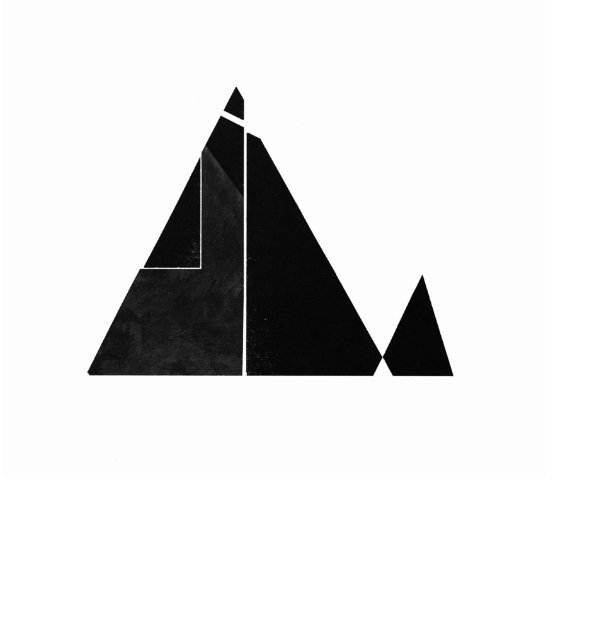
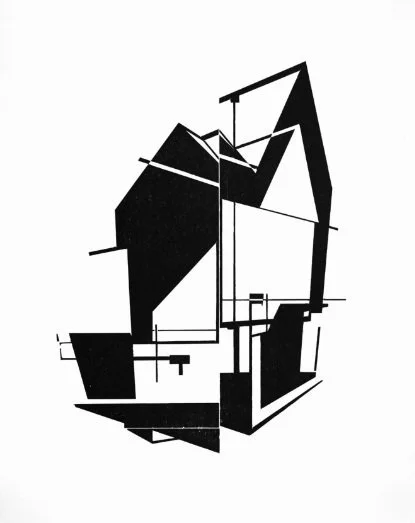
Josh Dannin, New Hampshire, 2022
This work was exhibited at The Gallery of WREN, Bethlehem, NH, 2022.